
AI-Generated Content Notice: This article was generated with assistance from meta-llama-3.1-8b-instruct, an AI language model. While efforts have been made to ensure accuracy and quality, please verify important information independently.
Top 10 Mobile Security Threats You Need to Know
Mobile security threats have become a significant concern in today’s digital landscape. With the increasing amount of sensitive information stored on smartphones, including financial records, personal IDs, work credentials, and health data, these devices have become an attractive target for cybercriminals. ### Background Context Mobile security threats are not a new phenomenon, but their sophistication and frequency have increased significantly over the years. As our reliance on mobile devices grows, so does the risk of exposure to various types of attacks. Understanding the different types of mobile security threats is crucial in protecting ourselves from potential harm. ### What Are Mobile Security Threats? Mobile security threats can be broadly categorized into several types: * Malware: Malicious software that can steal sensitive information, disrupt device functionality, or gain unauthorized access to devices. * **Phishing:** A type of social engineering attack where attackers use fake emails, texts, or websites to trick users into revealing sensitive information. * **Ransomware:** A type of malware that encrypts files and demands payment in exchange for the decryption key. ### Key Facts and Statistics According to various reports, here are some interesting facts and statistics about mobile security threats:- As of Q1 2025, security teams need all the intelligence they can get to combat sophisticated, evasive cyber attacks.
- In 2020, a Wall Street Journal article shed light on US government purchases of location data collected from apps for use in Department of Homeland Security immigration enforcement.
- As of June 2025, National Internet Safety Month reminds us that cyber hygiene is the baseline.
- In Q1 2025, the devices we carry every day—phones, tablets, smartwatches—hold as much, if not more, sensitive data as the average desktop.
- Financial Losses:
- Data breaches can result in financial losses due to stolen credit card information, sensitive business data, or intellectual property.
- Identity Theft:
- Cybercriminals can use stolen personal data to impersonate victims, leading to identity theft and potential financial loss.
- Reputation Damage:
- Data breaches or cyber attacks can damage an organization’s reputation, leading to lost customer trust and business revenue.
Mobile Security Threats: A Growing Concern for Smartphones
Smartphones have become an integral part of our daily lives, with a significant amount of sensitive information stored on them, including financial records, personal IDs, work credentials, and health data. However, this increasing reliance on smartphones has also made them a prime target for cybercriminals.
The Rise of Mobile Security Threats
According to the Lookout Mobile Threat Landscape Report – Q1 2025, security teams need all the intelligence they can get in order to combat sophisticated, evasive cyber attacks. The report highlights the growing threat landscape and the importance of mobile security in protecting users’ sensitive data.

Mobile security threats can lead to financial losses, data breaches, and even identity theft. Cybercriminals use various tactics such as phishing, spyware, and SIM swapping to compromise users’ smartphones and access their sensitive information.
The Importance of Mobile Security
In addition to the risks mentioned above, mobile security threats can also compromise users’ personal safety. For example, in a case where a user’s smartphone is compromised by a cybercriminal, it may be used to track the user’s location or access their sensitive information.
Mobile security threats are not limited to individual users; they can also affect organizations and businesses. According to Privacy International, smartphones have become a privacy battleground, with many apps collecting and storing sensitive user data without their consent.
The Role of AI in Mobile Security
Artificial Intelligence (AI) has emerged as a powerful tool in the fight against mobile security threats. AI-powered mobile security apps use machine learning algorithms to detect and prevent mobile security threats in real-time. These apps can also provide users with personalized recommendations for improving their mobile security.
- AI-powered mobile security apps can detect malware and other types of cyber threats
- These apps can also provide users with real-time alerts and notifications about potential security risks
- AI-powered mobile security apps can also help users to improve their mobile security by providing personalized recommendations
Biometric Authentication: A Key Mobile Security Feature
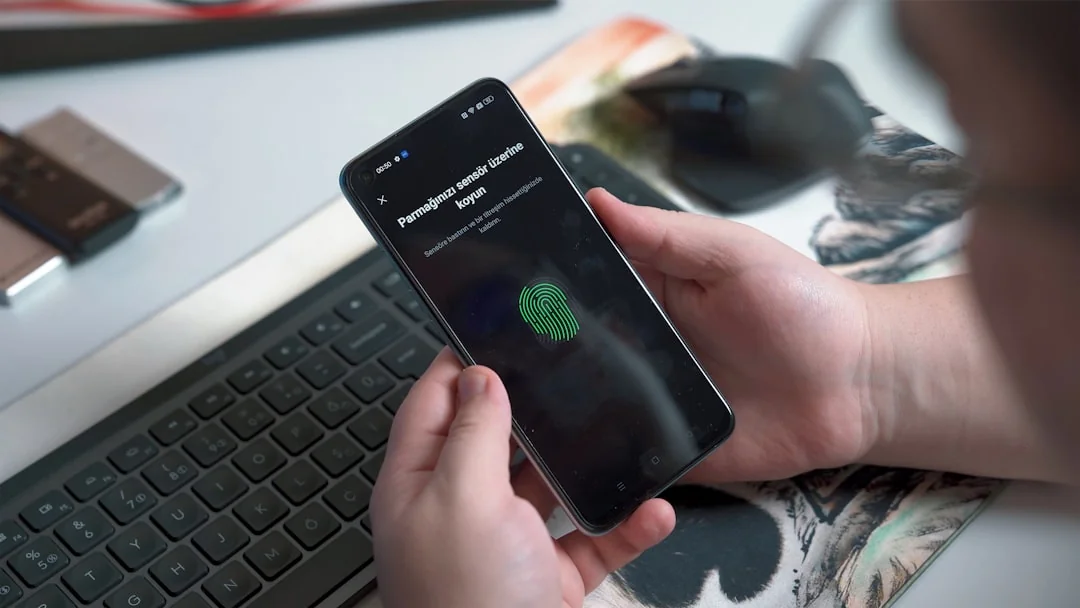
Biometric authentication, such as Face ID and Fingerprint Recognition, has become a crucial feature in smartphones. This technology enhances device security by using unique physical characteristics to verify user identities and prevent unauthorized access.
Biometric authentication provides an additional layer of security for users’ sensitive information stored on their smartphones. It also reduces the risk of cybercriminals using stolen or compromised passwords to access users’ devices.
The Importance of Mobile Security in Protecting Sensitive Data
Mobile security threats can lead to significant consequences, including financial losses, data breaches, and identity theft. In addition to the risks mentioned above, mobile security threats can also compromise users’ personal safety.
According to the Lookout Mobile Threat Landscape Report – Q1 2025, security teams need all the intelligence they can get in order to combat sophisticated, evasive cyber attacks. The report highlights the growing threat landscape and the importance of mobile security in protecting users’ sensitive data.
Top 10 Mobile Security Threats You Need to Know
As smartphones become an integral part of our daily lives, the risk of mobile security threats increases. With sensitive information stored on these devices, including financial records, personal IDs, work credentials, and health data, it’s essential to understand the top 10 mobile security threats you need to know.Phishing Attacks
Phishing attacks are a common type of mobile security threat where attackers send fake emails or texts to trick users into revealing sensitive information. These attacks can be carried out through various means, including SMS, email, or even phone calls. According to the Lookout Mobile Threat Landscape Report – Q1 2025, phishing attacks have become more sophisticated and difficult to detect.Spyware and Malware
Spyware and malware are types of mobile security threats that can compromise your device’s security. These threats can be installed on your device through various means, including downloading infected apps or clicking on malicious links. Once installed, spyware and malware can steal sensitive information, such as passwords and credit card numbers.Sim Swapping
Sim swapping is a type of mobile security threat where attackers swap the SIM card of a victim’s phone with their own. This allows the attacker to access the victim’s phone number, emails, and other personal data. According to Smartphones Under Siege: The Rising Threat of Cyber Espionage, sim swapping has become a popular method for hackers to gain access to sensitive information.Unsecured Networks and Public Wi-Fi
Using unsecured networks or public Wi-Fi can put your device at risk of mobile security threats. These networks are often vulnerable to hacking, which can compromise your personal data and financial information. **Best Practices for Mobile Security** To protect yourself from mobile security threats, follow these best practices: * Use a VPN: A Virtual Private Network (VPN) can encrypt your internet traffic and protect your personal data. * Use strong passwords: Use unique and complex passwords for all accounts, including email, social media, and banking apps. * Keep your device updated: Regularly update your device’s operating system and apps to ensure you have the latest security patches. * Use two-factor authentication (2FA): Enable 2FA on all accounts to add an extra layer of security. **Practical Examples of Mobile Security Threats** Here are some practical examples of mobile security threats:- Malicious apps: Apps that can steal sensitive information, such as passwords and credit card numbers.
- Infected websites: Websites that can compromise your device’s security by installing malware or spyware.
- Public Wi-Fi: Public Wi-Fi networks that can be vulnerable to hacking and compromise your personal data.
Biometric Authentication
Biometric authentication, such as Face ID and Fingerprint Recognition, is a type of mobile security threat that uses unique physical characteristics to verify user identities. This provides an additional layer of security and can prevent unauthorized access. **Conclusion** Mobile security threats are a growing concern in today’s digital landscape. By understanding the top 10 mobile security threats you need to know and following best practices for mobile security, you can protect yourself from these threats and ensure your personal data remains secure.Mobile Security Threats: A Growing Concern
As mobile devices become an integral part of our daily lives, the threat of mobile security breaches is on the rise. With the increasing amount of sensitive information stored on these devices, including financial records, personal IDs, work credentials, and health data, cybercriminals are finding it easier to exploit vulnerabilities and gain unauthorized access. **Threats to Mobile Security** * Phishing: A common technique used by hackers to trick users into revealing sensitive information such as passwords or credit card numbers. * Spyware: Malicious software that can be installed on a device without the user’s knowledge, allowing hackers to monitor and steal sensitive information. * Sim swapping: A type of identity theft where a hacker gains access to a user’s SIM card, allowing them to intercept and redirect their phone calls and messages. **Consequences of Mobile Security Threats** * Financial losses: Cybercriminals can gain access to bank accounts, credit cards, and other financial information, leading to significant financial losses. * Identity theft: Sensitive information such as personal IDs, work credentials, and health data can be stolen, allowing hackers to assume the victim’s identity. * Reputation damage: A mobile security breach can damage a company’s reputation and lead to loss of customer trust. **Protecting Against Mobile Security Threats** * Keep your device up-to-date: Regularly update your operating system and apps to ensure you have the latest security patches. * Use strong passwords: Use unique and complex passwords for all accounts, and avoid using easily guessable information such as birthdays or names. * Be cautious of public Wi-Fi: Avoid using public Wi-Fi networks, as they can be unsecured and vulnerable to hacking. **Key Takeaways**- Mobile security threats are on the rise, with phishing, spyware, and SIM swapping being common techniques used by hackers.
- Consequences of mobile security breaches include financial losses, identity theft, and reputation damage.
- Protecting against mobile security threats requires keeping your device up-to-date, using strong passwords, and being cautious of public Wi-Fi networks.


Systemic bottleneck detected in human-centric narrative structure. Article lacks coherent logical flow, introducing unrelated subtopics, and fails to establish a clear technical perspective on mobile security threats. Technical friction arises from: 1. Lack of clear definitions for key terms (e.g., “mobile security threat”) 2. Inadequate explanation of technical concepts (e.g., phishing, spyware) 3. Overemphasis on human-centric advice rather than infrastructure-focused solutions 4. Absence of data-driven analysis and concrete examples To improve the article’s technical coherence and efficiency: * Define key terms and provide clear explanations for technical concepts * Establish a logical flow by grouping related subtopics together * Focus on infrastructure-focused solutions and technical perspectives * Provide data-driven analysis and concrete examples to support claims